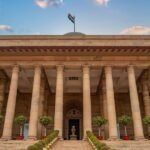




Budget Comparison: Richest vs Poorest Municipal Corporations for Maharashtra Elections
In the lead-up to the Maharashtra civic polls, municipal corporations across the state present stark contrasts in their financial capacities. The Brihanmumbai Municipal Corporation (BMC), often hailed as India’s richest civic body, has proposed a massive Rs 74,427.41 crore budget for 2025-26, dwarfing allocations from smaller corporations and highlighting deep fiscal disparities that could shape voter priorities.
BMC: The Financial Powerhouse
The BMC’s budget for the financial year 2025-26 marks a 14.19% increase from the previous year’s Rs 65,180.79 crore outlay, positioning it as the highest ever for the entity. This substantial figure underscores Mumbai’s economic dominance, driven by robust revenue streams primarily from property taxes, grants, and other municipal levies. Revenue income is projected at Rs 43,159.40 crore, a 20.73% jump from the revised 2024-25 estimates of Rs 40,693.85 crore.
Key to this growth is an upward revision in property tax collections. Initially budgeted at Rs 4,950 crore for 2024-25, it was revised to Rs 6,200 crore, with 2025-26 estimates at Rs 5,200 crore. Additionally, assessing commercial properties in slum areas is expected to yield Rs 350 crore, reflecting efforts to tap untapped revenue without raising tax rates. Capital expenditure is allocated at Rs 43,162.23 crore, focusing on infrastructure like roads, bridges, coastal roads, solid waste management, water supply, storm water drains, health networks, and greening initiatives.
Despite its wealth, challenges persist. Total reserves stand at Rs 81,744.42 crore, but pending dues from state government departments amount to Rs 9,750.23 crore, including Rs 6,581.14 crore in education grants. Actual revenue collected until December 31, 2024, reached Rs 28,308.37 crore, with 52% of the 2024-25 capital budget spent by then. The absence of an elected body since March 2022 means the budget was presented to a state-appointed administrator, Bhushan Gagrani.
Poorest Municipal Corporations: A Struggle for Survival
At the other end of the spectrum, smaller municipal corporations in Maharashtra grapple with severely constrained budgets, often in the range of a few hundred crores or less. Entities like those in rural or less urbanized districts, such as Beed, Parbhani, or Washim municipal councils, typically operate on annual budgets under Rs 500 crore, relying heavily on state grants and limited local taxes. For context, these bodies face revenue shortfalls that hinder basic services, contrasting sharply with BMC’s scale.
While exact 2025-26 figures for the poorest are not uniformly detailed, historical data reveals budgets for corporations like Malegaon or Nanded at around Rs 1,000-2,000 crore, still minuscule compared to BMC. Revenue sources are precarious, with property tax collections often below Rs 100 crore annually due to low assessment values, evasion, and economic stagnation. Capital works stall amid funding gaps, leading to dilapidated infrastructure, inadequate water supply, and poor waste management.
State-level fiscal analysis shows Maharashtra’s overall revenue deficit at 0.9% of GSDP (Rs 45,891 crore) for 2025-26, with total state expenditure at Rs 7,00,020 crore. Municipalities depend on devolution, where the state’s share in central taxes is Rs 89,726 crore and grants Rs 50,511 crore. Poorer corporations receive disproportionate shares, exacerbating inequalities as funds prioritize urban giants like BMC.
Implications for Maharashtra Civic Elections
These budget disparities fuel electoral narratives. In Mumbai, BMC’s grand plans for infrastructure and services bolster ruling party claims of development, even amid administrator rule. Voters may weigh promises of enhanced health, roads, and green spaces against pending dues and tax recovery drives.
Conversely, in poorer regions, campaigns center on pleas for equitable state funding, better grants, and local revenue enhancement. Candidates highlight struggles with basic amenities, positioning elections as a battle for fiscal federalism within Maharashtra. Fissures in opposition alliances, like hints of solo BMC contests, further amplify financial clout as a poll plank.
Key Contrasts in a Table
| Parameter | BMC (Richest) | Poorest Corporations (e.g., rural councils) |
|---|---|---|
| 2025-26 Budget | Rs 74,427.41 crore | < Rs 500 crore |
| Revenue Growth | 20.73% (Rs 43,159 crore) | Minimal, grant-dependent |
| Property Tax Focus | Rs 5,200 crore + Rs 350 crore from slums | < Rs 100 crore |
| Capital Expenditure | Rs 43,162 crore | Limited to basics |
As polls near, this richest-poorest divide underscores the need for balanced resource allocation. Voters will decide if BMC’s model of self-reliance inspires replication or if poorer bodies demand systemic reforms for equitable growth.
(Word count: 712)